|
|

 |
|
|
|
|
 |
New York
Architecture Images-Brooklyn Bronx Zoo |
|
architect |
Heins & La Farge |
|
location |
southern Bronx Park |
|
date |
1897 |
|
style |
Beaux-Arts |
 |
|
 |
|
  |
|
 |
|
 |
|
|
images |
 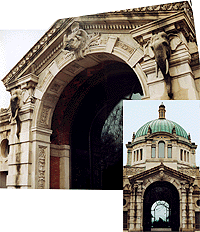 |
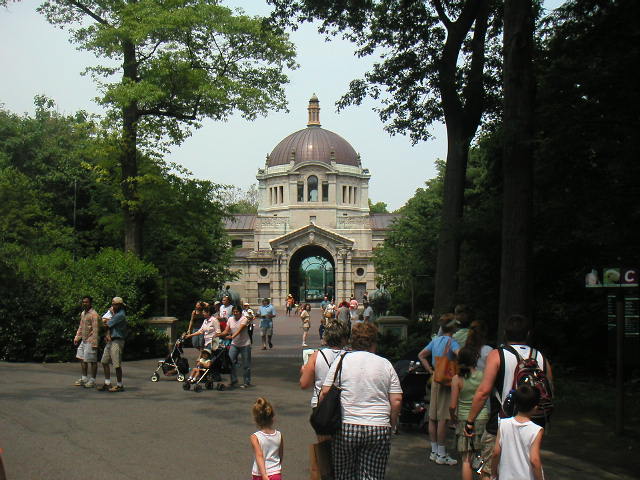
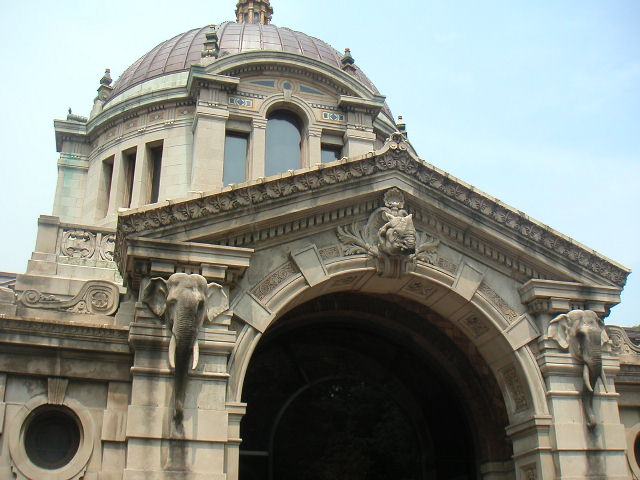
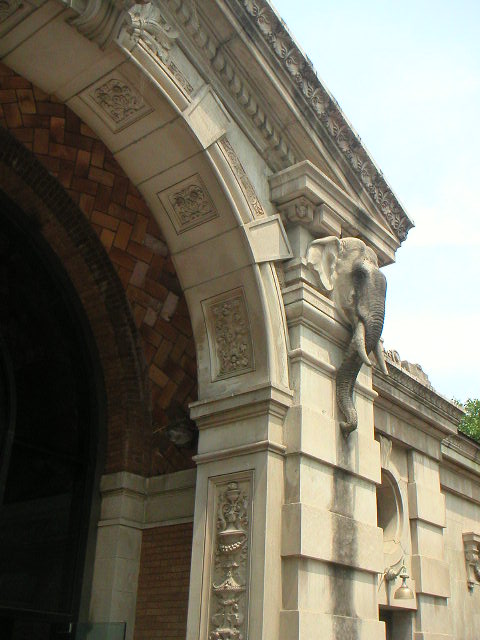
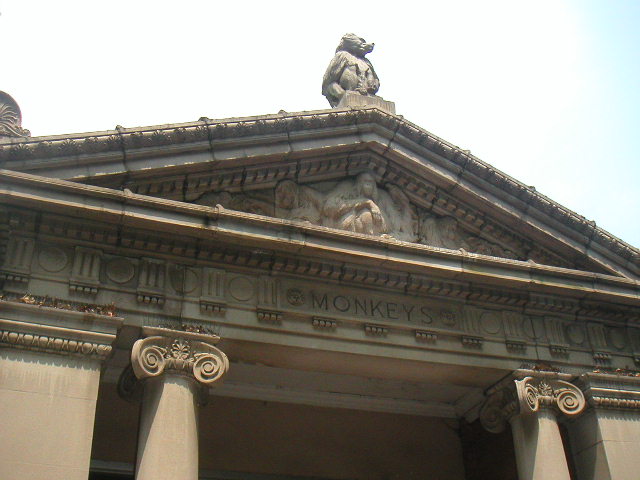
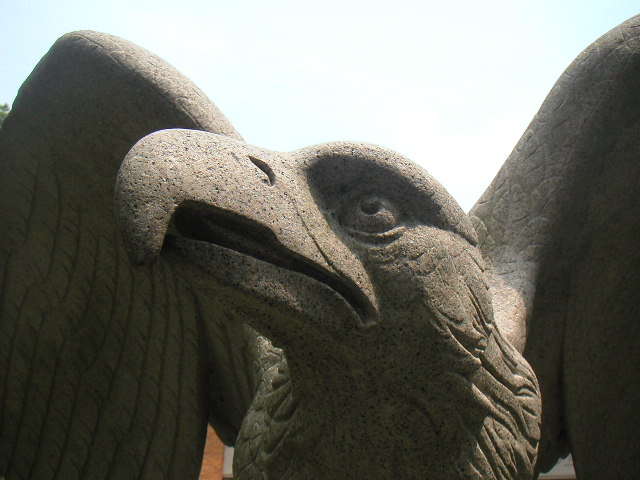
| Six playful structures designed for the Bronx Zoo by Heins & Lafarge were the Aquatic Bird House (1899), the Reptile House (1900), the Primate House (1902), the Lion House (1903), the Large Bird House (1905) above, and the Elephant House (1908) below. | |
 |
|
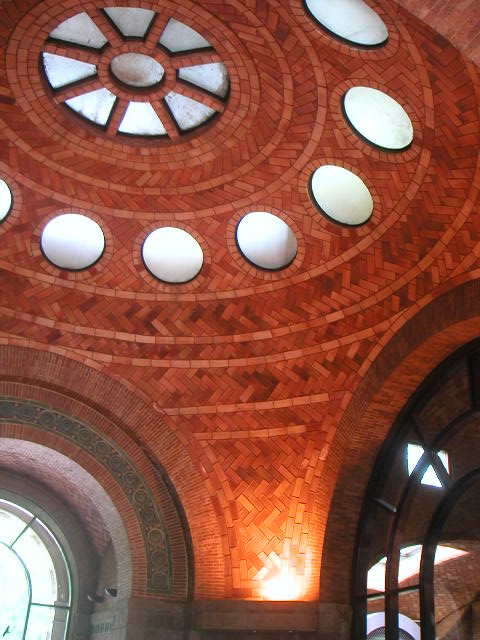
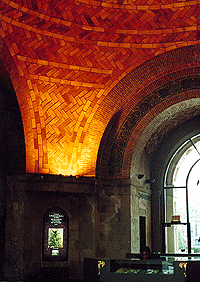
| The Guastavino polychromed tile arches and vaults of the Elephant House of the Bronx Zoo are structural as well as decorative. They feature ornamental figures of elephants, hippopotamus and rhinoceros. Heins & Lafarge used their experience from the zoo to the subway stations and they brought the Guastavinos along with them. | |
|
The Central Park Zoo, the oldest Zoo in New York City, began as a menagerie, purportedly opened when the park's workers received a bear and other animals as gifts. By 1864 the menagerie had a separate budget published in the annual report of the parks department, and it was a popular attraction despite the poor condition of its animal cages. It survived proposals by real-estate developers to abolish it or move it to Manhattan Square (now the site of the Museum of Natural History), to another location in Central Park, or out of Manhattan altogether. Frederick Law Olmsted and Calvert Vaux included zoological grounds in their design of Prospect Park (1866), but the zoo did not open until 1893. New York State awarded a charter to the New York Zoological Society in 1885 that empowered it to build a zoological garden. William Hornaday (1844-1937), a well-known zoologist and one of the founders of the National Zoological Park in Washington, became the director of the project and selected a site for the new zoo in southern Bronx Park. Plans were drawn up by Heins & Lafarge in 1897, and construction began in the following year. The New York Zoological Park, which became known as the Bronx Zoo, opened in 1899. Its naturalistic, parklike settings were in marked contrast to the small exhibits in Central Park. In 1902 the Bronx Zoo appointed the first full-time veterinarian at a zoo in the United States. Breeding sanctuaries were set aside for the nearly extinct American Bison, a project that influenced wildlife conservation efforts worldwide. |
|
|
links |
|


