|
|

 |
|
|
|
|
 |
New York
Architecture Images-Soho 36-57 White St. Landmark |
|
architect |
various architects, including John Kellum and Son. |
|
location |
36-57 White St. |
|
date |
1861-5 |
|
style |
Renaissance Revival |
|
construction |
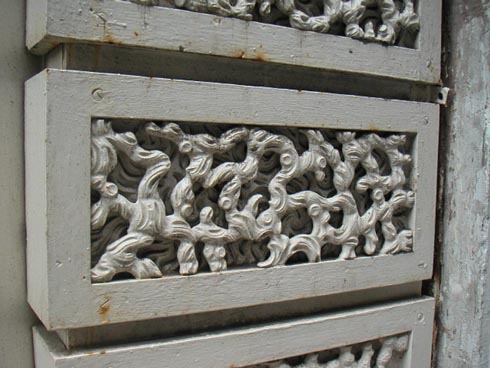
Cast Iron Facade |
|
type |
|
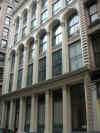
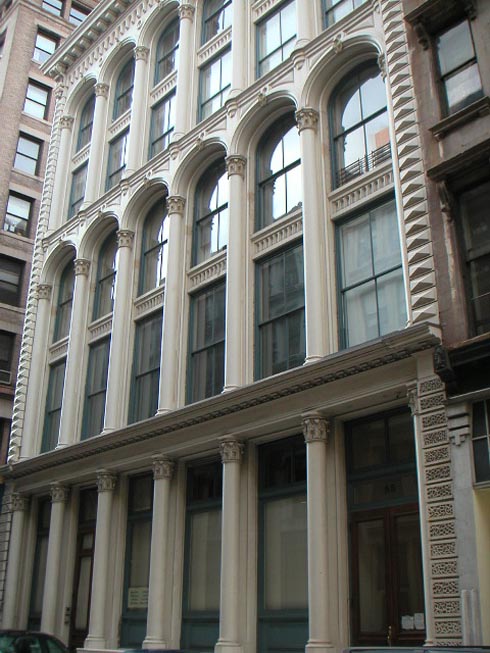
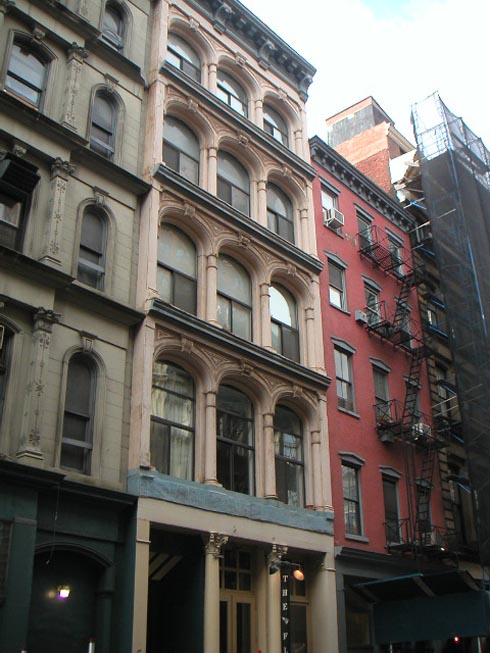
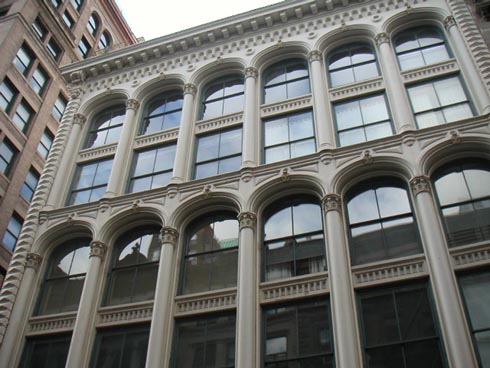
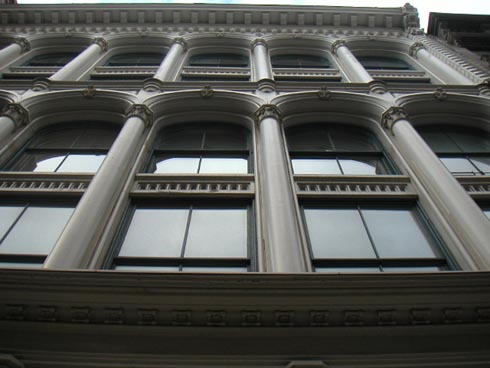
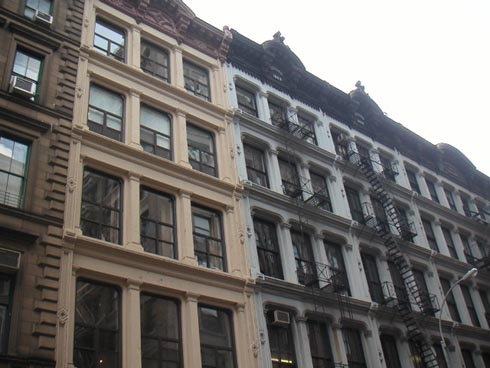
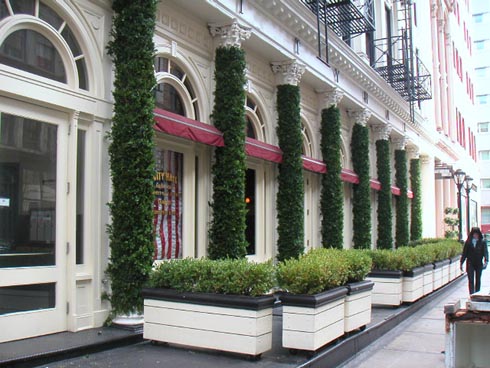
| A superb street of neo-Venetian cast-iron factory warehouses. | |
  |
|
  |
|
  |
|
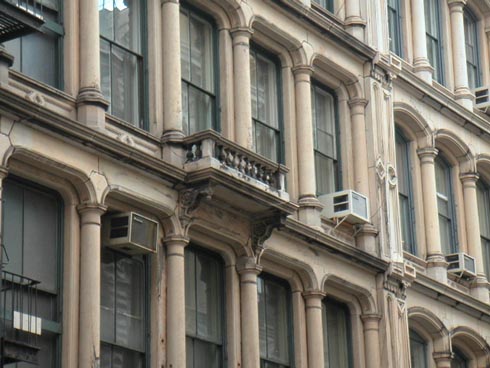
| Wood's Mercantile Buildings | |
  |
|
 |
|
  |
|
|
notes |
White St.
(namesake unknown). At 77 White
St., East of Broadway, were the premises of the now defunct Mudd Club,
one of the earliest downtown nightclubs (1978), which lured artists, new
wavers, punk rockers, and people who enjoyed proximity to the avant-garde.
The Club is gone but apparently lives on in the hearts of its devotees, for
slogans such as "Long live Mudd" and "Punk's Not Dead" have been
spray-painted on the facade of the building.
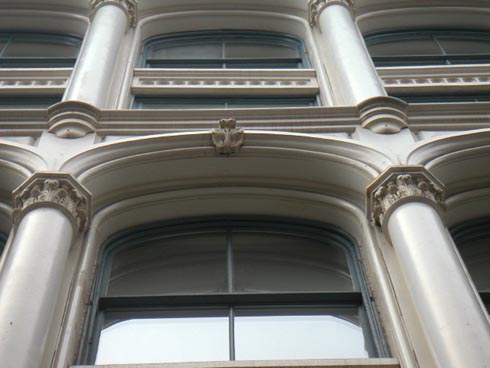
A block south, at the S.W. corner of Broadway and Franklin St., si the James White Building (1881-82; W. Wheeler Smith), a cast-iron palazzo which arrived late in a neighborhood mostly built up before the Civil War. High up on the south wall is a sign, faintly visible, advestizing Civil War photographer Mathew Brady's studio, located above a saloon at 359 Broadway before the war. Return to White St. After the Civil War, many of the Greek Revival homes and shops that previously occupied this part of town were torn down in favor of larger industrial buildings, and, like SoHo to the north, Tribeca has substantial offerings of cast-iron architecture. On the south-west corner of Franklin Place stands 55 White St. (1861; James Kellum & Son), a building deemed sufficiently handsome by iron founder Daniel D. Bedger to display its facade in his 1865 catalogue. At the time the building had keystones crowning the tall arches, Corinthian capitals atop the columns, and faceted quoins on the pier at the corner of Church St. Early occupants were Samuel I. and Elliot Condict, who had a large saddlery here; in later years draper and textile firms tenanted the space.The triangular pediment of 46-50 White St. (1865), identifies WOODS MERCANTILE BUILDINGS. Across the street at 49 White St. is the Civic Center Synagogue (1967; William N. Berger Ass.), an undulating expanse of marble hemmed by its rectilinear neighbors. The sculptures in front are by Alain Kirili. |
|
links |


